
Palazzo Vecchio, Florence: Tickets, Arnolfo Tower & Guided Tour
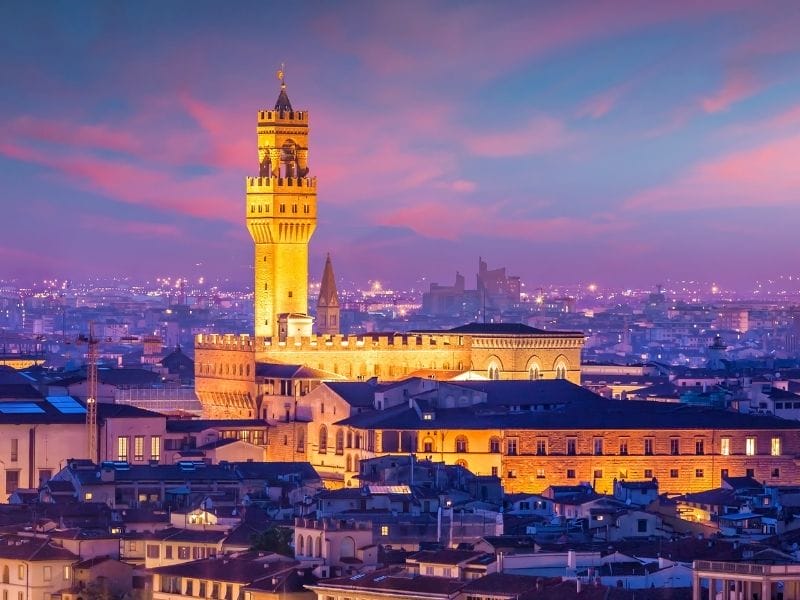
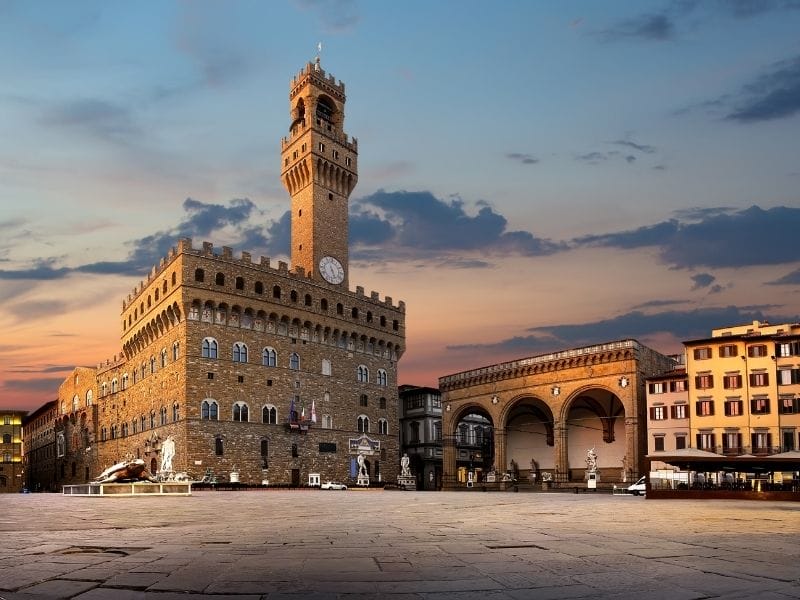
Let’s be honest, you can’t walk through Florence without bumping into Palazzo Vecchio. That fortress-looking building on Piazza della Signoria? Yep, that’s the one.
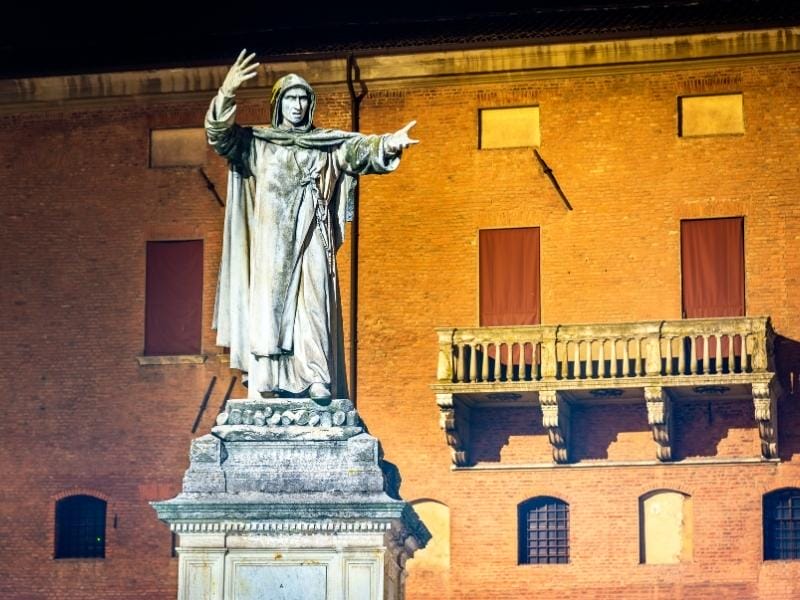
The spot where Cosimo I de’ Medici once ruled, Savonarola got condemned, and Michelangelo’s David originally stood guard. We’ve been inside more times than we can count, and every visit still catches us off guard.
So before you show up hoping to just “walk in,” here’s what you actually need to know about Palazzo Vecchio tickets, what’s inside, and whether the tower climb is worth the leg burn. Spoiler: it is.
- Updated on
Palazzo Vecchio Tickets at a Glance
Palazzo Vecchio Tickets (Skip the Line) + Audio Guide App:
-> available here – from €31 per person
Guided Palazzo Vecchio Tours:
-> available here – from €32 per person
Skip-the-line tickets include a timed slot and a separate fast-track lane. In high season, on-site lines can easily stretch past an hour, so if you’re visiting between May and September, booking online isn’t optional; it’s survival.
At GetYourGuide you will find an extensive selection of tickets and tours in Florence.
The best thing about it: you save valuable time as you don't have to wait in line at many sights.
Most tickets can be canceled free of charge and the company has an excellent reputation!
Palazzo Vecchio Entrance Fee
|
Ticket-Option
|
Price
|
|---|---|
|
Adults (18 and older) at the door
|
Around €19
|
|
EU Citizens (18-25 years)
|
Around €13
|
|
Children & Teens (under 18)
|
Free
|
|
Ground floor and Michelozzo courtyard
|
Free for everyone (no advance booking)
|

Why Palazzo Vecchio Is the Symbol of Florence
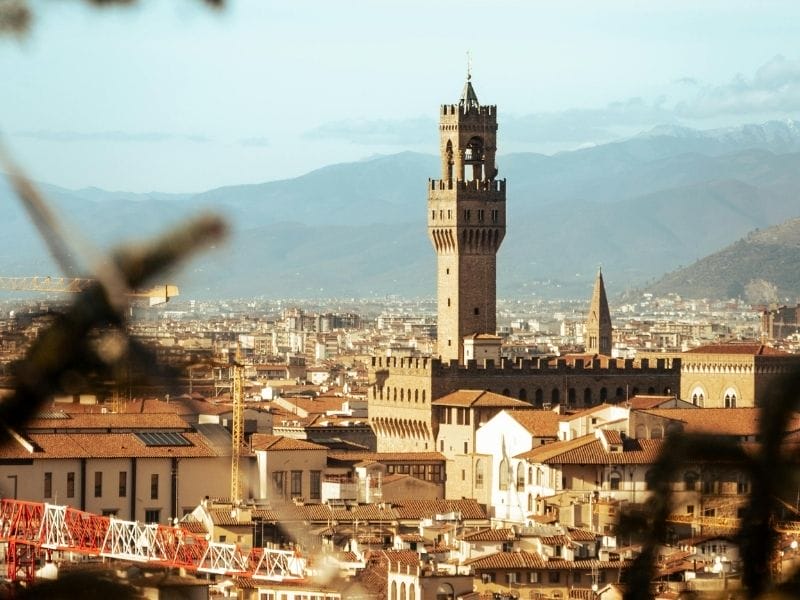
Palazzo Vecchio is the symbol of the city of Florence. Full stop. The building has been the town hall for more than seven centuries, and it still is today. The Florence city council meets here. Weddings happen here. And right below your feet, archaeologists are still digging up Roman ruins.
It sits in the heart of Florence, in Piazza della Signoria, a two-minute walk from the Uffizi and five minutes from the Duomo. Palazzo Vecchio was built starting in 1299 and designed by Arnolfo di Cambio, the same architect behind Santa Croce and the first stage of the Duomo. The guy had a busy calendar.
Over the centuries, the building has gone by a few names: Palazzo dei Priori, Palazzo della Signoria, Palazzo Ducale, and finally Palazzo Vecchio (“Old Palace”), which is what stuck after Cosimo I de’ Medici moved his court across the river to Palazzo Pitti in 1565.
Which Palazzo Vecchio Ticket Should You Book?
There are four main ways to visit the Palazzo Vecchio Museum. Here’s how they stack up:
| Ticket Type | What’s Included | Best For | Approx. Price |
|---|---|---|---|
| Standard Skip-the-Line | Museum entry, timed slot, main floors | Quick independent visits | from €24 |
| Skip-the-Line + Audio Guide | Entry + multilingual audio commentary | History buffs who want context | from €31 |
| Museum + Arnolfo Tower | Museum + 95 m tower climb | View-lovers, photographers | from €23 |
| Secret Passages Guided Tour | Hidden corridors, small group, expert guide | Medici fans, repeat visitors | from €32 |
If this is your first time visiting Palazzo Vecchio, we’d go with skip-the-line + audio guide. The palace has so many layers of history that walking in cold is a bit like opening a novel at chapter twelve — you’ll see pretty things, but you’ll miss why they matter.
Please also note that these prices vary on GetYour Guide.
What You'll See Inside Palazzo Vecchio
Palazzo Vecchio is big. Like, bigger-than-it-looks-from-outside big. The museum is spread across multiple floors of Palazzo Vecchio, and each one has its own personality.
Ground Floor: The Courtyard You Didn't Know Was Free
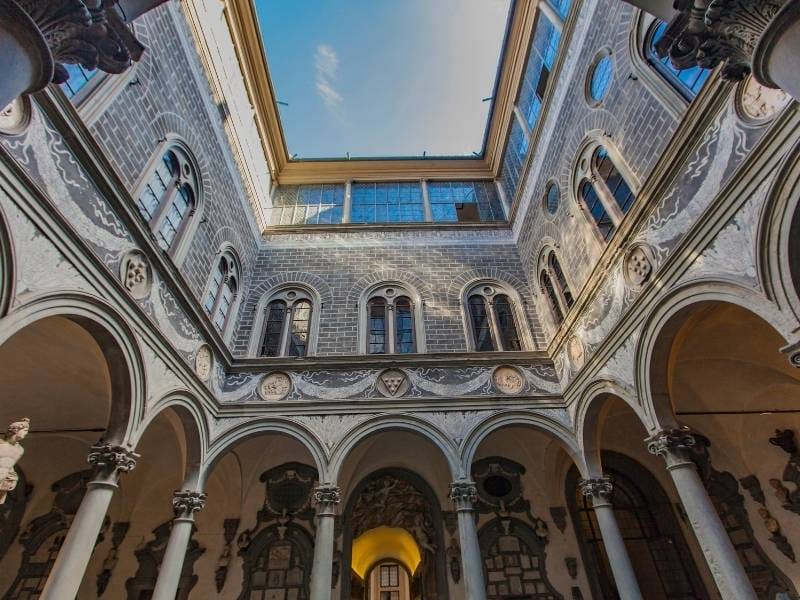
The ground floor of Palazzo Vecchio houses Michelozzo’s courtyard, redesigned by Vasari in 1565 for the wedding of Francesco I de’ Medici. You can walk in without a ticket. Seriously. Pop in, admire the frescoes and the little fountain with the cherub, then walk back out. Most tourists don’t realize this part is free.
First Floor: The Salone dei Cinquecento
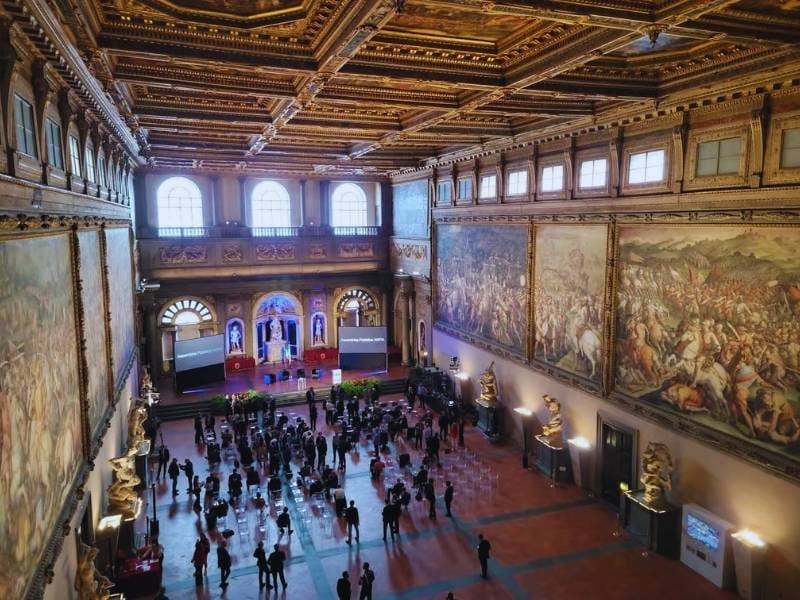
This is the showstopper. The Salone dei Cinquecento (“Hall of the Five Hundred”) is 54 meters long, 23 meters wide (177 x 75 feet), and covered, floor to ceiling, in frescoes by Giorgio Vasari celebrating Medici victories. It was originally commissioned in 1494 to host the 500-member Great Council of the Florentine Republic. Hence the name.
Fun bonus: historians still debate whether a lost Leonardo da Vinci fresco, “The Battle of Anghiari”, is hidden behind one of Vasari’s walls. Nobody’s found it yet. Also on the first floor: the Studiolo of Francesco I, a tiny windowless room stuffed with mannerist paintings and alchemical symbols. It’s weird. It’s great.
Second Floor: Medici Apartments and the Hall of Lilies
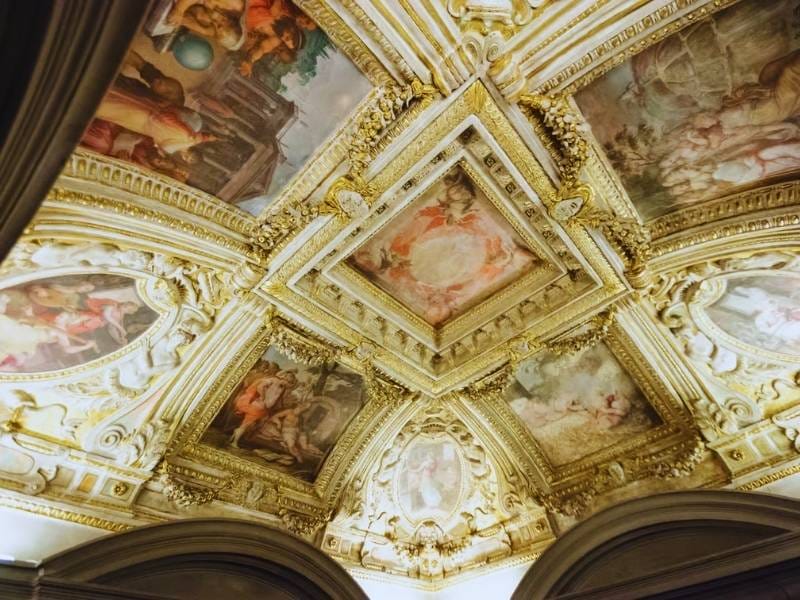
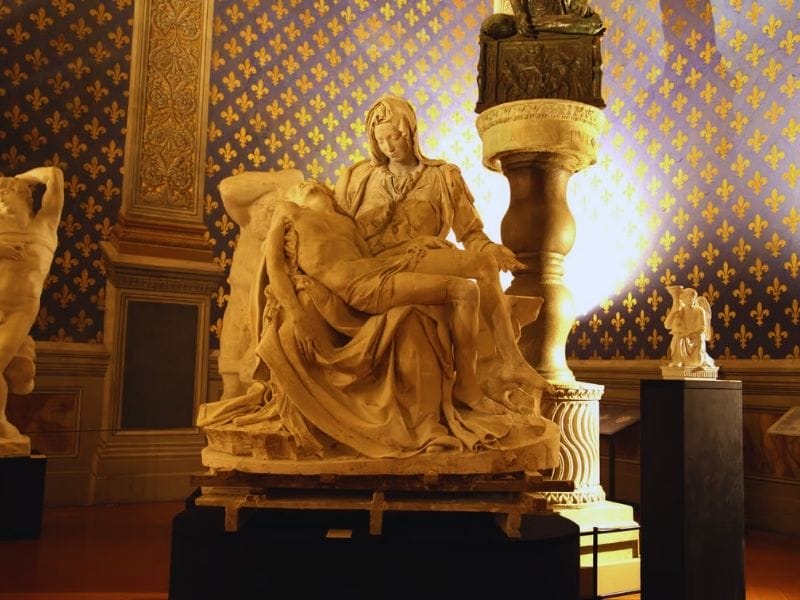
The second floor of Palazzo Vecchio is where things get personal. These are the rooms where Cosimo I de’ Medici and his wife Eleonora of Toledo actually lived. You’ll walk through the Hall of Lilies (named for its French-inspired gilded fleur-de-lis ceiling), the Hall of Maps with its hand-painted Renaissance cartography, and Eleonora’s private chapel, every inch of it painted by Bronzino.
Archaeological Level: Roman Ruins Under Your Feet
Palazzo Vecchio was built on top of a Roman theater from the 1st century AD. A glass walkway on the lower level lets you look straight down at the excavated stone, a quiet, strange moment in an otherwise loud building.

Climbing the Arnolfo Tower
The Arnolfo Tower is the 95-meter (312 feet) bell tower attached to Palazzo Vecchio, named after, you guessed it, Arnolfo di Cambio. Climbing it is one of the best things to do in Florence if your knees are up to it.
- 223 steps up a narrow medieval staircase
- Panoramic views of Florence: the Duomo, the Arno, the rooftops of the historic center of Florence
- Tower access requires a separate ticket
- Not recommended for anyone with heart conditions, claustrophobia, or a fear of heights
- Closed in heavy rain for safety reasons
- Children must be accompanied by an adult
The tower climb is worth it on a clear day. The panoramic views of Florence from the top are arguably better than from Giotto’s Campanile, and it’s usually less crowded. Book the tower combo ticket early, though; tower capacity is tight, and slots sell out.
The Secret Passages: Where the Medici Hid
If you’ve already done Palazzo Vecchio, the Secret Passages tour is how you level up. A licensed guide takes a small group through hidden corridors, narrow stairways, and concealed chambers that the Medici family used to move between rooms and, when necessary, to escape.
Highlights include:
- The Studiolo of Francesco I, accessible through a secret door
- The trusses above the Salone dei Cinquecento (yes, the ceiling)
- Cosimo I’s private staircase, designed by Vasari for total privacy
- The Treasure Room of Cosimo the Elder
This one’s a fan favorite. Book a week in advance during peak season.
A Quick History of Palazzo Vecchio
The construction of the Palazzo Vecchio began in 1299, commissioned by the Republic of Florence to house the Priori, the city’s supreme governing body. Arnolfo di Cambio drew up the plans. The building went up fast, in typical Tuscan fortress style: thick walls, rusticated stone, tiny windows, one big off-center tower.
Palazzo Vecchio was built on the ruins of homes belonging to the Uberti family, the Ghibellines, who’d been exiled from Florence in 1266. The Florentines deliberately picked that spot to erase them from memory. Petty, but effective.
In 1540, Cosimo I de’ Medici moved in and turned the fortress into a proper ducal palace. He hired Giorgio Vasari to redesign the interiors, doubling the palace in size. The Medici lived here until 1565, when they relocated to Palazzo Pitti across the Arno, which is connected to Palazzo Vecchio via the Vasari Corridor, a kilometer-long covered passage that runs over the Ponte Vecchio and through the Uffizi.
After the Medici moved out, the building became Florence’s town hall. And it still is today.
Opening Hours & When to Visit
- Monday, Tuesday, Wednesday: 9:00 AM – 7:00 PM
- Thursday: 9:00 AM – 2:00 PM (early close)
- Friday, Saturday, Sunday: 9:00 AM – 7:00 PM
- Ticket office: closes 1 hour before the museum
- Arnolfo Tower: 9:00 AM – 5:00 PM
- Closed: 25 December and 1 January
- Summer evenings: extended hours occasionally until 11:00 PM (check the official site)
- Best time slot to visit: first thing in the morning at 9:00 AM, or after 4:00 PM. Both windows are quieter than mid-morning, when tour groups dominate. Tuesday and Wednesday are the calmest days. Skip the first Sunday of the month; museum entry is free, but the lines are brutal.
How to Get to Palazzo Vecchio
Palazzo Vecchio is located in Piazza della Signoria, smack in the middle of Florence’s historic center. You walk there. That’s basically the only option, the piazza is inside the ZTL (limited traffic zone), so cars aren’t allowed in.
- From Santa Maria Novella train station: 10–15 minutes on foot through the old town
- From the Duomo: 5 minutes south on Via dei Calzaiuoli
- From the Uffizi Gallery: 2 minutes — they share a wall
- From Palazzo Pitti: 10 minutes across the Ponte Vecchio
- Bus: lines C1 or C2 to “Galleria degli Uffizi” or “Condotta”
- Tram: T2 to “Unità” stop, then a 10-minute walk
Is Palazzo Vecchio Fully Accessible?
Most of the Palazzo Vecchio museum is wheelchair accessible. A ramp at the main entrance on Piazza della Signoria gets you inside, and an elevator serves the main floors, including the Salone dei Cinquecento. People with disabilities enter for free, along with one accompanying person.
Two areas are not fully accessible: the Arnolfo Tower (stairs only) and the mezzanine. The tower requires climbing 223 steep stone steps, so it’s not suitable for visitors with limited mobility.
Things to Know Before Booking
- Arrive 15 minutes before your time slot for security screening
- Large suitcases and backpacks aren’t allowed; small bags only
- No flash photography, no tripods, no professional gear without permission
- Audio guides in six languages (IT, EN, FR, ES, DE, PT)
- The palace takes roughly 1.5–2 hours to explore at a relaxed pace
- Add 45 minutes for the Arnolfo Tower climb
- Add 45 minutes for the Secret Passages tour
- Free cancellation is offered on most online tickets up to 24 hours ahead of time
- The first Sunday of the month is free, but expect long lines
- No dress code, shoulders covered only if you plan to visit nearby churches after
What's Near Palazzo Vecchio?
Palazzo Vecchio is in the heart of Florence, so you’re basically a stone’s throw from everything worth seeing. Our favorite nearby stops:
- Uffizi Gallery, literally next door
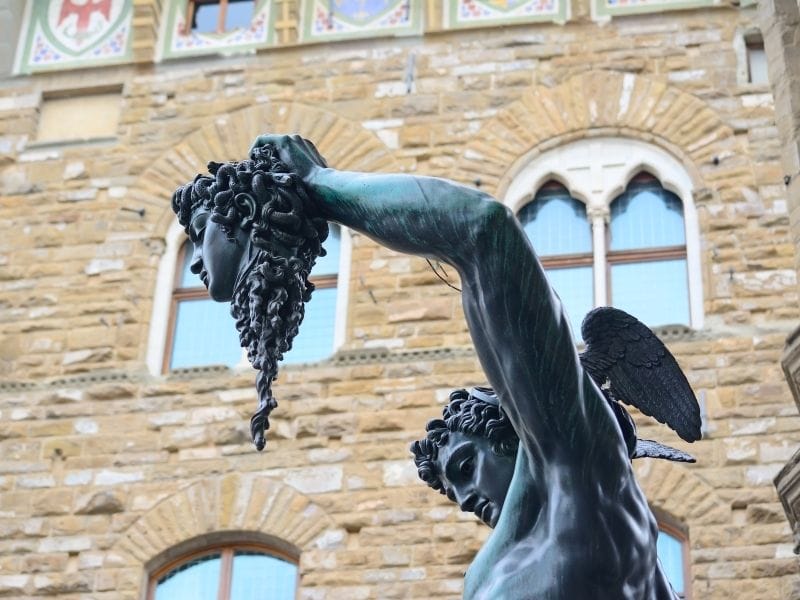
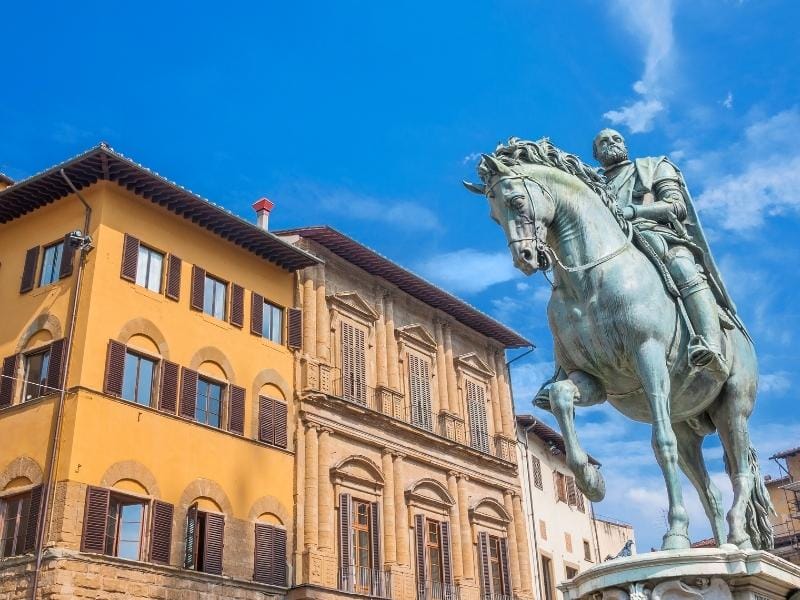
- Piazza della Signoria, the open-air sculpture gallery right outside
- Ponte Vecchio, 5 minutes south
- Duomo (Santa Maria del Fiore), 5 minutes north
- Accademia Gallery (where Michelangelo’s original David now lives), 10 minutes north
- Palazzo Pitti and the Boboli Gardens, 10 minutes across the Arno
- Caffè Rivoire, directly opposite, serves one of the best hot chocolates in Italy
Our Honest Take
Palazzo Vecchio is one of those Florence stops where you think “eh, I’ll just look at it from outside”, and then you go in, and two hours later you’re still staring at a ceiling trying to figure out what Vasari was actually trying to say.
If you only have one day in Florence, pair Palazzo Vecchio with the Uffizi, and you’ve basically done the Renaissance greatest hits in a single afternoon. If you’ve got more time, add the Accademia for David, the Duomo for the view, and Palazzo Pitti for the gardens. And book skip-the-line entry. Just trust us.
FAQ About Palazzo Vecchio
How much do Palazzo Vecchio tickets cost?
Palazzo Vecchio tickets cost around €19 for adults at full price, €13 reduced for EU citizens aged 18 to 25, and are free for visitors under 18. Skip-the-line tickets with an audio guide start at around €25, and tower combos at around €29.
What are the opening hours of Palazzo Vecchio?
Palazzo Vecchio opening hours are 9:00 AM to 7:00 PM daily, with early closing at 2:00 PM on Thursdays. The Arnolfo Tower is open 9:00 AM to 5:00 PM. The ticket office closes one hour before the museum. Closed on 25 December and 1 January.
Do I need to book Palazzo Vecchio tickets in advance?
Yes, booking Palazzo Vecchio tickets in advance is strongly recommended. Lines at Piazza della Signoria regularly exceed one hour in peak season. Online skip-the-line tickets give you a timed slot and fast-track entry, saving you up to 60 minutes of waiting.
Is the Arnolfo Tower climb worth it?
The climb to the Arnolfo Tower is worth it for most visitors. The 223 steps lead to panoramic views of Florence, including the Duomo and the Arno. Tower access requires a separate ticket, and it’s closed in the rain. Not recommended for those with mobility issues.
What's inside Palazzo Vecchio?
Inside Palazzo Vecchio, you’ll see the Salone dei Cinquecento, the Medici apartments, the Hall of Lilies, the Hall of Maps, the Studiolo of Francesco I, Vasari’s frescoes, and Roman ruins beneath the building. Plan 1.5 to 2 hours for a full museum visit.
Can I visit Palazzo Vecchio for free?
Yes, you can visit Palazzo Vecchio for free on the first Sunday of each month, though expect very long queues. The ground floor and Michelozzo courtyard are always free. Visitors under 18 and people with disabilities enter the full museum for free year-round.
How long does a visit to Palazzo Vecchio take?
A self-guided visit to Palazzo Vecchio takes about 1.5 to 2 hours. Add 45 minutes for the Arnolfo Tower climb and another 45 minutes for the Secret Passages guided tour. Budget a full 2 to 3 hours if you want to see everything the palace has to offer.
Where is Palazzo Vecchio located?
Palazzo Vecchio is located in Piazza della Signoria, in the historic center of Florence, at Piazza della Signoria, 50122 Firenze. It is a 10-minute walk from Santa Maria Novella train station, 5 minutes from the Duomo, and directly next to the Uffizi Gallery.
Is Palazzo Vecchio fully accessible?
Palazzo Vecchio is largely accessible. Ramps and elevators connect most main areas, including the Salone dei Cinquecento. Visitors with disabilities enter for free with one companion. The Arnolfo Tower is stairs-only and not accessible to those with limited mobility.
What's the difference between Palazzo Vecchio and Palazzo Pitti?
Palazzo Vecchio is Florence’s medieval town hall in Piazza della Signoria, built in 1299. Palazzo Pitti is the later Renaissance palace across the Arno, where the Medici moved in 1565. Palazzo Pitti houses art collections and connects to the Boboli Gardens.
Are guided tours of Palazzo Vecchio worth it?
Guided tours of Palazzo Vecchio are worth it if you want deep context on Medici history, Vasari’s frescoes, and hidden areas. The Secret Passages guided tour is especially recommended, offering exclusive access to private corridors and rooms closed to standard ticket holders.
Who built Palazzo Vecchio?
Palazzo Vecchio was built starting in 1299 by the Florentine architect Arnolfo di Cambio, who also designed the Duomo and Santa Croce. Giorgio Vasari later redesigned and expanded the interiors in the mid-16th century, commissioned by Cosimo I de’ Medici.
Author

Welcome!
My name is Allie.
Italy is one of my favorite countries to visit in Europe, especially Florence!
I love everything the city has to offer. From the architecture to the most delicious food and wine, Florence has it all. So, come with me on this beautiful journey through Florence.
Allie
Did you know that …
By purchasing through my links, you support me at no additional cost.
Thank you for your support. ♥️
via GetYourGuide
via Booking.com
Flights to Florence
via Skyscanner
Be sure to also check out: