
Boboli Gardens: Tickets & Tours 2026
Behind the Pitti Palace lies one of the most magical places in all of Tuscany. The Boboli Gardens are not just a park in the city; they are a real open-air museum, a Renaissance fairytale, and one of the most photogenic corners of Florence. Here is everything you need to know to visit, including 2026 prices, the best entry options, and our favorite insider tips.

- Updated on
Boboli Garden Tickets glance:
Pitti Palace & Boboli Gardens Ticket & Ebook:
-> available here – from €39 per person
Uffizi, Pitti Palace, & Boboli Combined 5-Day Pass:
-> available here – from €68 per person
Guided Pitti Palace, Boboli Garden, Palatine Gallery Tours:
-> available here – from €88 per person
Our pick: If you are doing both the Pitti Palace and the Boboli Gardens, the €39 combined ticket is the smartest buy. It saves money, includes the Bardini Gardens, and gives you the full Medici complex in one go. If you are only here for the gardens, the standalone Boboli Gardens entrance ticket is plenty. Please also note that prices on GetYourGuide vary daily and weekly. GetYourGuide runs many discounted prices.
At GetYourGuide you will find an extensive selection of tickets and tours in Florence.
The best thing about it: you save valuable time as you don't have to wait in line at many sights.
Most tickets can be canceled free of charge and the company has an excellent reputation!
Boboli Gardens Entrance Fee
|
Ticket-Option
|
Price
|
|---|---|
|
Standard adult ticket at the door
|
€10 (€11–€15 with online booking fee)
|
|
Combi ticket (Pitti Palace + Boboli)
|
Approx. €39 (via GetYourGuide)
|
|
Children & Teens (under 18)
|
Free (booking fee applies online for ages 6-17)
|
|
Guided Tour (booked via GetYourGuide)
|
From approx. €88 per person
|

Why Visit the Boboli Gardens?
Picture this. You have just spent the morning weaving through the crowded streets of Florence. The sun is hot, the gelato is melting, and your feet are tired. Then you walk through the gates of the Boboli Gardens, and suddenly the city falls away.
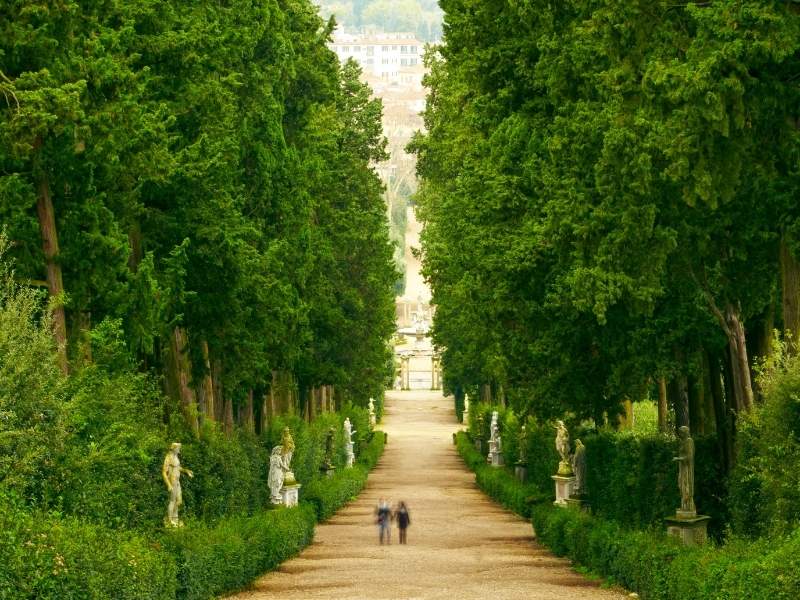
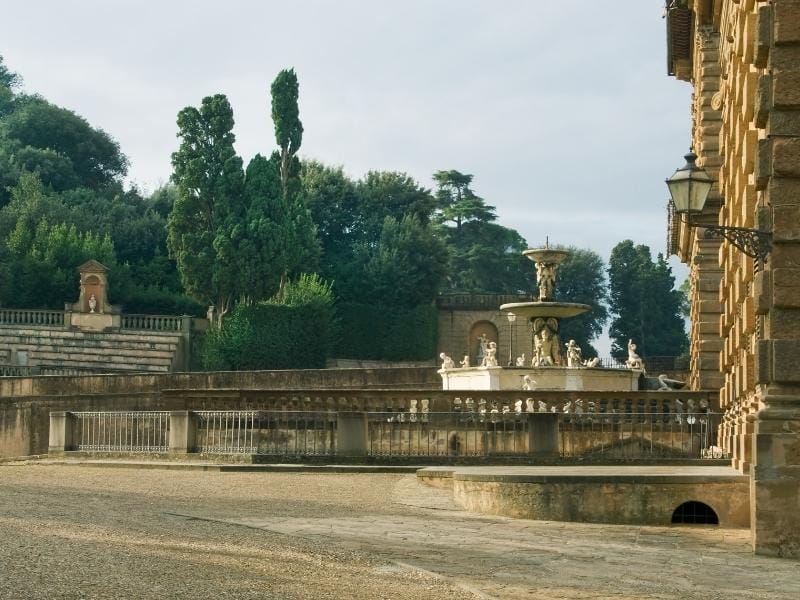
What unfolds before you is 11 acres of Renaissance landscape design. Cypress avenues. Stone fountains. Hidden grottos. Marble statues peeking out from shaded paths. And from the top of the gardens, a panorama of the Florence Duomo so beautiful it almost feels staged.
The Boboli Gardens are the green heart of Florence and a UNESCO World Heritage Site. They were laid out in the 16th century for Cosimo I de’ Medici and his wife Eleonora, and they set the template for the classic Italian garden style that later inspired Versailles. Today, they hold over 500 sculptures, several iconic fountains, and a hilltop view that you absolutely cannot get anywhere else in town.
If you are visiting Florence and have time for only one beautiful garden, this is the one.
Highlights of Your Visit to the Boboli Gardens
The Boboli Gardens are huge. Like, much bigger than people expect. So a tiny bit of planning pays off. Here are the absolute must-see spots inside the Boboli Gardens, the ones we always send friends to first.
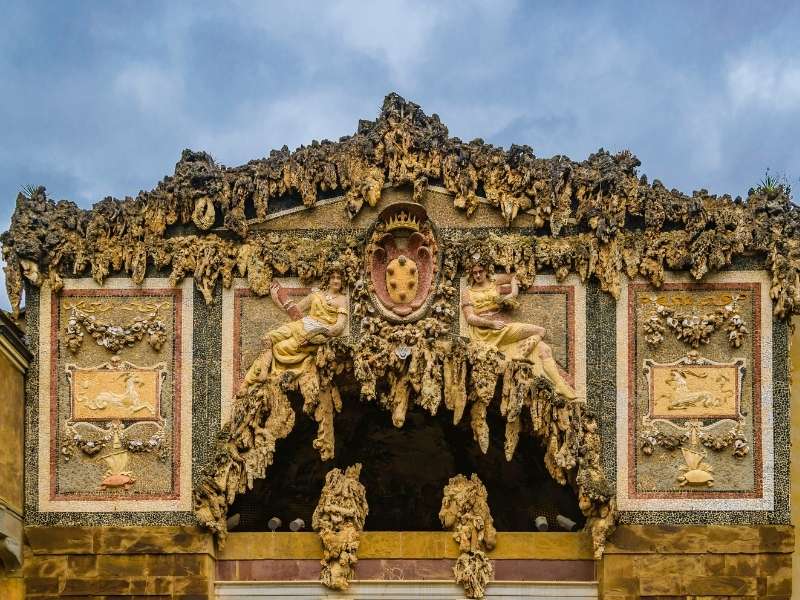
The Buontalenti Grotto (Grotta Grande)
The Grotta Grande is the wildest piece of architecture in the gardens. It was built between 1583 and 1593 by Bernardo Buontalenti, the architect and sculptor who basically defined Mannerist Florence. The grotto looks like a melting cave from a dream. Stalactites drip down the walls. Frescoes peek out from the ceiling. Sculpted shepherds and animals seem to emerge from the rock itself.
The Buontalenti Grotto once housed Michelangelo’s Prisoners, the unfinished slaves now in the Accademia Gallery. Today, you can still see plaster copies in their original niches.
The Amphitheater and Egyptian Obelisk
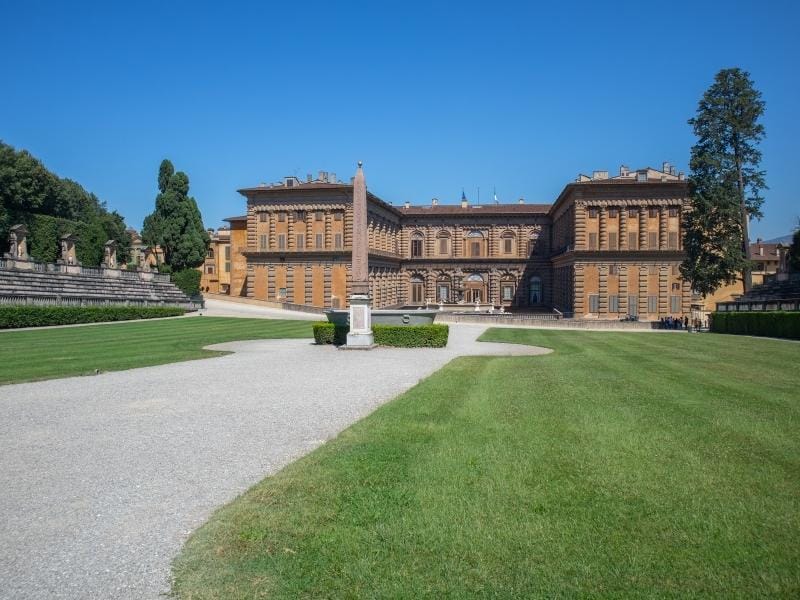
Walk up the slope behind Palazzo Pitti, and you reach the amphitheater. This horseshoe-shaped open-air theater hosted some of Europe’s first opera performances in the early 1600s. At its center sits a real Egyptian obelisk from the temple of Amon at Heliopolis, brought here in 1789 by the Medici. Behind the obelisk, a Roman granite basin from the Baths of Caracalla. We are not making this up. The Medici really did furnish their gardens with stolen antiquities.
The Fountain of Neptune
The fountain of Neptune sits on the upper terrace, right above the amphitheater. The bronze sea god, surrounded by tritons, is locally known as the “fountain of the fork” thanks to his three-pronged trident. From the steps around the fountain, you get one of the best views of the city in all of Florence, with the Duomo rising above the rooftops like a postcard.
The Isolotto and Ocean Fountain
Halfway down the long Viottolone cypress avenue, you reach the Isolotto. This is a small island floating in an oval pond, ringed by lemon trees and statues. At its center stands Giambologna’s monumental Ocean Fountain. The Isolotto is the most romantic corner of the entire garden, and yes, it has been used in plenty of films.
The Kaffeehaus and the Giardino del Cavaliere
Up near the top of the gardens, the Kaffeehaus is a sweet pale-green Rococo pavilion built in 1775 for the Habsburg-Lorraine grand dukes who took over after the Medici line ended. The terrace next to it has wide views over the rooftops of Florence and out toward Fiesole.
A short climb above the Kaffeehaus, you reach the Giardino del Cavaliere. This intimate garden sits on a bastion built by Michelangelo in 1529 as part of the Florence city walls. It is also home to the Porcelain Museum, currently closed for refurbishment. The view alone makes the climb worth it.

How Long Is the Wait at the Boboli Gardens?
The Boboli Gardens get around 4 million visitors a year. Most of them try to enter through the main gate at Pitti Palace. So yes, lines can happen.
From April through October, expect waits of 20 to 45 minutes at the Pitti Palace courtyard entrance, especially between 10 a.m. and 1 p.m. In November through March, lines are usually under 20 minutes.
The good news: with skip-the-line tickets booked online, you go straight to security and are inside in 5 to 10 minutes. We honestly never visit without booking ahead, even in the off-season. The booking fee is a few euros and saves you a chunk of your day.
How to Avoid the Crowds
- Book your Boboli garden tickets online at least 1 to 2 days in advance
- Enter at 8:15 a.m. when the gates open, or after 4 p.m.
- Tuesday, Wednesday, and Thursday are quieter than the weekends
- Use the Porta Romana or Annalena entrance instead of Pitti for fewer queues
- Avoid the first Sunday of the month between October and March; entry is free, but extremely crowded

Boboli Gardens Opening Hours 2026
Opening hours change with the seasons, so plan accordingly. The gardens always open at 8:15 a.m., but the closing time shifts month by month.
| Period | Opening Hours | Last Admission |
|---|---|---|
| January, February, November, December | 8:15 a.m. – 4:30 p.m. | 3:30 p.m. |
| March, October (standard time) | 8:15 a.m. – 5:30 p.m. | 4:30 p.m. |
| April, May, September | 8:15 a.m. – 6:30 p.m. | 5:30 p.m. |
| June, July, August | 8:15 a.m. – 7:10 p.m. | 6:10 p.m. |
Closed: the first and last Monday of every month, January 1, May 1, and December 25.
How to Get to the Boboli Gardens
The main entrance to the Boboli Gardens is on the courtyard of Palazzo Pitti, on the south side of the Arno in the Oltrarno neighborhood. From the Duomo, it is a 15-minute walk over the Ponte Vecchio. Honestly, the walk is half the fun.
- On foot: 10 minutes from Ponte Vecchio, 15 minutes from the Duomo
- By bus: Lines C3 and 11 stop at Piazza Pitti
- Other entrances: Annalena (Via Romana), Porta Romana, and Forte Belvedere
If you find a long line at the main entrance, walk five minutes around the corner to the Annalena gate on Via Romana. Same ticket, far fewer people.
A Quick History: From Quarry to Royal Garden
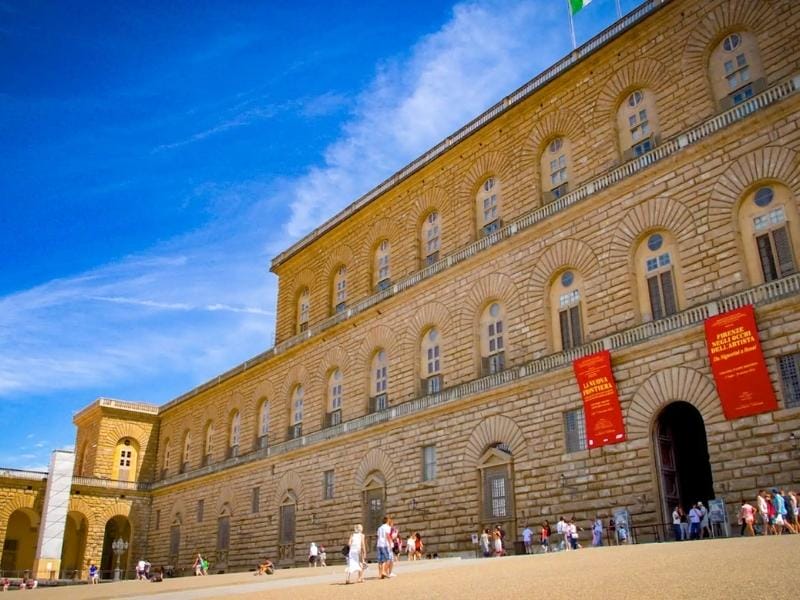
The story of the Boboli Gardens begins with stone. Literally. The hillside behind Palazzo Pitti was an old quarry, and the soft yellow stone dug from it was used to build Palazzo Pitti for the wealthy Florentine banker Luca Pitti, starting in 1458.
Luca Pitti wanted a palace bigger than the Medici’s. Plot twist: his family ran out of money before they could finish, and the Medici eventually bought the unfinished palace in 1549. Cosimo I and Eleonora di Toledo turned the quarry behind it into their private garden, and the Boboli Gardens were born.
Over the next four centuries, every ruling dynasty added its own touch. The Medici built the amphitheater and the Buontalenti Grotto. The Habsburg-Lorraine added the Kaffeehaus and extended the gardens to Porta Romana. The Savoy kings of Italy contributed the final touches. The result is a 400-year layered masterpiece, opened to the public in 1766 and listed as a UNESCO World Heritage Site in 2013.
Tips Before You Go
- Wear comfy shoes; the gardens are mostly gravel paths and steep slopes
- Bring water in summer; there are drinking fountains scattered around but few cafés
- Plan at least 90 minutes inside the Boboli Gardens; 2 to 3 hours is ideal
- Photography is allowed everywhere; flash and tripods need permission
- Strollers are allowed, but the slopes are steep; baby carriers are easier
- The Bardini Gardens are included in your ticket and are just a 10-minute walk away
- The Porcelain Museum is closed for renovation through 2026; check before going

What to See Near the Boboli Gardens
The location near Palazzo Pitti puts you right in the middle of Oltrarno, our favorite neighborhood in Florence. Easy add-ons after your visit:
- Palazzo Pitti, with the Palatine Gallery and Royal Apartments
- Bardini Gardens, smaller and more intimate, are included in your ticket
- Ponte Vecchio, 5 minutes north along the Arno
- Piazzale Michelangelo, for the best sunset view in town
- Santa Maria del Carmine with the Brancacci Chapel frescoes
- Uffizi Gallery, 12 minutes on foot across the river
- Palazzo Vecchio, 15 minutes north, the medieval town hall of Florence
- Accademia Gallery, where Michelangelo’s original David lives
The Boboli Gardens are not just a pretty park behind the Pitti Palace. They are 400 years of Medici ambition carved into a Florentine hillside, complete with grottos, statues, fountains, and views that turn every photo into a postcard. Whether you go for one hour or three, whether you book the standalone ticket or the combined Pitti pass, this splendid garden absolutely belongs on your Florence itinerary.
Lace up your comfy shoes, book your tickets ahead of time, and let the Medici show you how a private pleasure garden becomes one of the most beautiful places in Tuscany. Buon viaggio!
Frequently Asked Questions About Boboli Garden Tickets
How much do Boboli Garden tickets cost in 2026?
Boboli Garden tickets cost €10 at the door or around €11-€15 when booked online in advance. The combined ticket for Palazzo Pitti and the Boboli Gardens is €39 via GetYourGuide same day. Again, prices may vary on GetYourGuide. There are many options to chose from. Children under 18 enter for free.
Are children under 18 free at the Boboli Gardens?
Yes, all visitors under 18 receive a free ticket to the Boboli Gardens, regardless of nationality. They still need a free reservation if entering with the family. Bring a valid ID or passport to prove your age at the entrance.
What does the Boboli Gardens entrance ticket include?
The entrance ticket to the Boboli Gardens includes full access to the gardens, the Bardini Gardens, the amphitheater, all fountains and grottos, and the Porcelain Museum (currently closed for refurbishment). It does not include entry to Palazzo Pitti, which requires a separate or combined ticket.
Is there a free entry day to visit the Boboli Gardens?
Yes, the Boboli Gardens offer free entry on the first Sunday of each month between October and March. Free admission also applies on April 25 and June 2. Expect very large crowds on these days; priority access tickets are not valid.
How long does it take to visit the Boboli Gardens?
A visit to the Boboli Gardens takes around 1.5 to 3 hours, depending on your pace. A focused 90-minute walk covers the amphitheater, Buontalenti Grotto, and Neptune Fountain. Allow a full half-day if you want to explore the Isolotto, the Giardino del Cavaliere, and the Bardini Garden as well.
Are skip-the-line tickets to the Boboli Gardens worth it?
Skip-the-line tickets to the Boboli Gardens are absolutely worth it from April through October, when queues at the Pitti Palace entrance can reach 30 to 45 minutes. Booking online costs only a few extra euros and saves valuable time on your visit to Florence.
Can I visit the Boboli Gardens without entering Palazzo Pitti?
Yes, you can buy a single Boboli Gardens ticket without visiting Palazzo Pitti. The standalone ticket gives you full access to the gardens and the Bardini Gardens. Many travelers choose the gardens-only option if they prefer outdoor exploration over museum visits.
What is the best entrance to the Boboli Gardens?
The main entrance to the Boboli Gardens is in the courtyard of Palazzo Pitti, but it is also the most crowded. The Annalena gate on Via Romana, the Porta Romana entrance, and the Forte Belvedere gate are usually faster, especially during peak season.
Is there a guided tour of the Boboli Gardens?
Yes, guided tours of the Boboli Gardens are available daily and last around one hour. A licensed guide walks you through the highlights, including the Buontalenti Grotto, the amphitheater, the Egyptian obelisk, and Giambologna’s Ocean Fountain, with stories about the Medici and Bernardo Buontalenti.
Are the Boboli Gardens accessible for wheelchairs and strollers?
The Boboli Gardens are partially accessible. The lower terraces near Palazzo Pitti can be reached with assistance, but the upper paths and gravel slopes are difficult for wheelchairs and strollers. Visitors with disabilities enter free with one accompanying person and use the Pitti Square gate.
Why are the Boboli Gardens called a real open-air museum?
The Boboli Gardens are called a real open-air museum because they hold over 500 ancient and Renaissance statues and sculptures spread across 11 hectares. From Roman antiquities to Mannerist masterpieces by Giambologna and Buontalenti, every path turns into a sculpture gallery beneath the Tuscan sky.
Author

Welcome!
My name is Allie.
Italy is one of my favorite countries to visit in Europe, especially Florence!
I love everything the city has to offer. From the architecture to the most delicious food and wine, Florence has it all. So, come with me on this beautiful journey through Florence.
Allie
Did you know that …
By purchasing through my links, you support me at no additional cost.
Thank you for your support. ♥️
via GetYourGuide
via Booking.com
Flights to Florence
via Skyscanner
Be sure to also check out: